It’s one of the most common questions ear health specialists are asked: “How do I clean my ears properly?” The answer might surprise you. For most people, the ears need very little help at all. But understanding how ear self-cleaning works, and knowing when it isn’t working, is key to maintaining healthy hearing without causing harm.
This guide walks you through how the ear canal naturally manages itself, safe at-home practices, the products worth considering, and the warning signs that mean it’s time to seek professional treatment for blocked ears.
The ear canal is one of the body’s most cleverly self-sufficient systems. Specialised glands in the outer third of the canal produce cerumen (earwax), which acts as a natural barrier, trapping dust, dead skin cells, bacteria, and foreign particles before they reach the eardrum.
Through a process called epithelial migration, the skin lining of the ear canal moves slowly outward, like a conveyor belt, carrying old wax and debris towards the ear opening, where it naturally falls out or is washed away during bathing. Jaw movement, such as chewing and talking, assists this process further.
For the majority of people, this system works seamlessly without any intervention. Problems arise when we interfere with it.
If you experience a mild sense of fullness in the ears or slight wax buildup, there are a few safe approaches you can take at home.
Warm water rinsing in the shower
The simplest and safest method is to allow warm water to flow gently into the ear canal during a shower. Tilt your head to one side, let the water run in, then tilt the other way to allow it to drain. Do not direct a powerful jet of water directly into the ear, as this can cause irritation or, in rare cases, damage the eardrum.
Softening drops
Over-the-counter ear drops designed to soften earwax can help the natural migration process along. Options include olive oil drops, sodium bicarbonate drops, and commercially prepared cerumenolytics (wax-softening solutions). These work by breaking down the wax and making it easier for the ear to expel it naturally.
To use softening drops: lie on your side with the affected ear facing upward, apply two to three drops, and remain in that position for five to ten minutes. Do this once or twice a day for up to five days.
Important: Do not use eardrops if you have a perforated eardrum, have had ear surgery, or if you are experiencing pain or discharge. If you are unsure, consult a professional before using any drops.
Understanding what not to do is just as important as knowing the safe methods.
Cotton buds
Despite being marketed for ear use, cotton buds are one of the most common causes of ear canal injuries and impacted earwax. Rather than removing wax, they push it deeper into the canal where it compacts against the eardrum. The NHS advises against inserting anything smaller than your elbow into your ear, and this guidance exists for good reason.
Ear candling
Ear candling, the practice of placing a hollow fabric candle in the ear and lighting it, is not supported by any clinical evidence and carries genuine risks including burns to the face and ear canal, blockage of the canal with candle wax, and even eardrum perforation. No reputable clinical body recommends this practice.
Jet irrigation at home
Irrigation devices intended for home use (such as those designed for nasal rinsing, sometimes repurposed for ears) can introduce too much water pressure into the ear canal and risk injury. Irrigation, when appropriate, should be performed by a trained clinician.
Fingernails, hairpins, or any rigid objects
Any object inserted into the ear risks lacerating the delicate skin of the canal, introducing bacteria, or perforating the eardrum. Even if you can see wax near the entrance of the canal, resist the urge to pick at it.
Most mild wax buildup resolves with softening drops or warm water. But there are specific signs that indicate you need professional treatment for blocked ears rather than home remedies.
Seek professional advice if you experience:
These symptoms may indicate earwax impaction, an ear infection, Eustachian tube dysfunction, or another condition that requires clinical assessment and treatment.
If self-care isn’t resolving the problem, a professional ear cleaning appointment is a safe, quick, and highly effective solution.
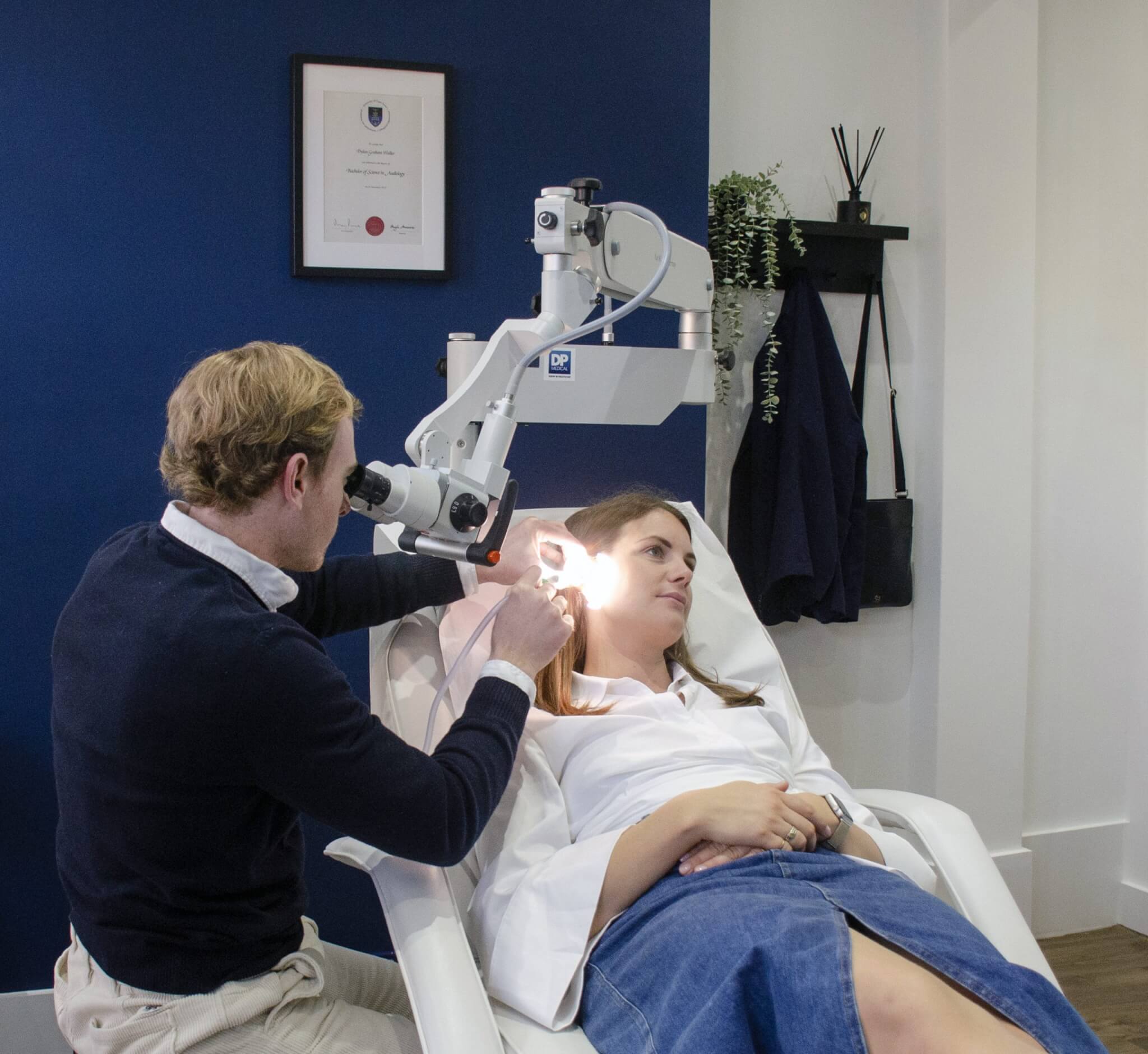
Microsuction is widely regarded as the gold standard for earwax removal. Using a fine suction device under a microscope or loupes, a trained specialist removes wax directly from the canal with precision. It is dry, does not involve water, and is suitable for most patients including those with a history of ear surgery or perforated eardrums.
Irrigation (also called ear syringing in its modern form) uses a gentle, controlled flow of warm water to flush out softened wax. It is effective but not suitable for all patients, which is why a pre-assessment is always recommended before treatment.
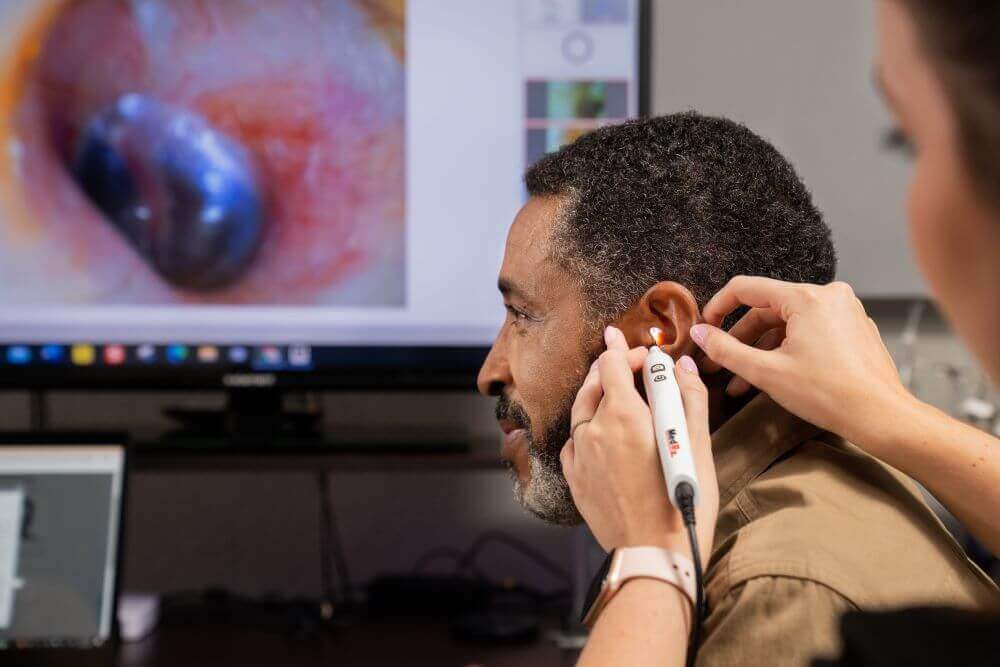
Manual instrumentation uses small, specially designed tools to remove wax under direct visualisation, useful for harder wax that cannot be suctioned easily.
At The Ear Clinic in Surrey, all wax removal procedures are carried out by experienced ear care professionals, with patient safety and comfort as the priority.
The market is full of ear cleaning gadgets, sprays, and devices, ranging from effective to outright dangerous. As a general guide:
If in doubt about a product, speak to an ear care specialist before using it.
The most important thing to understand about ear cleaning is this: less is more. The ear is designed to look after itself, and the most common ear problems are caused not by neglect but by well-intentioned interference.
If you are experiencing persistent symptoms of blocked ears, reduced hearing, or discomfort, professional treatment is the safest and most effective path to relief. Our team at The Ear Clinic offers expert ear care services across Surrey, including microsuction, hearing assessments, and personalised ear health advice.
Book an appointment today and take the first step towards clearer, healthier hearing.
Microsuction
Hearing Assessments

Tinnitus management
For most people, no. The ear canal is self-cleaning. Earwax naturally migrates out of the canal on its own through a process called epithelial migration, assisted by jaw movement. Routine cleaning is generally unnecessary and can do more harm than good.
The safest at-home method is allowing warm water to flow gently into the ear during a shower, then tilting your head to let it drain. For mild wax buildup, over-the-counter softening drops such as olive oil or sodium bicarbonate drops can help the ear expel wax naturally.
No. Cotton buds push wax deeper into the ear canal rather than removing it, which can lead to impacted earwax and potential injury to the eardrum. The NHS advises against inserting anything into the ear canal, including cotton buds.
No. Ear candling has no clinical evidence to support its effectiveness and carries real risks including burns, canal blockages from candle wax, and eardrum perforation. No reputable clinical body recommends it and it should be avoided entirely.
If you experience persistent ear fullness, muffled hearing, sudden tinnitus, earache, discharge, or dizziness, it is time to see a professional. These symptoms can indicate earwax impaction or an underlying condition that requires clinical treatment rather than home care.
Microsuction is the gold standard method for professional earwax removal. A trained specialist uses a fine suction device under magnification to safely remove wax from the ear canal. It is dry, precise, and suitable for most patients including those with a history of ear surgery or a perforated eardrum.
We are pleased to introduce our Executive Club Membership, designed for those who value exceptional ear care and personalised service.
Join Executive Club