If you’ve ever had a cold or sinus infection and noticed your ears feeling blocked, you’re not alone. Many people experience ear pressure when their sinuses are congested.
This happens because the ears and sinuses are closely connected through small passages that regulate pressure.
Understanding sinus ear pressure can help explain why these symptoms occur and when it might be worth seeking advice.
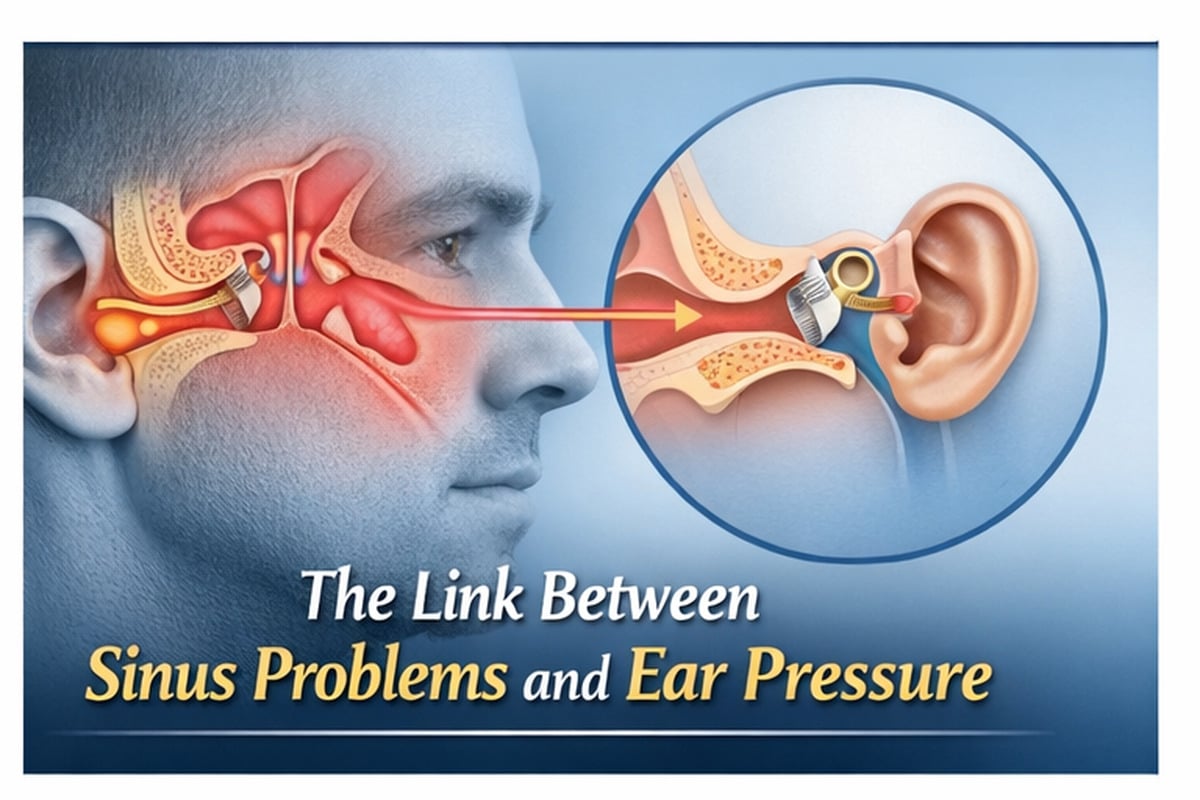
Inside the ear is a small tube called the Eustachian tube. This connects the middle ear to the back of the nose and throat.
Its main job is to balance pressure inside the ear. When the Eustachian tube works normally, it opens and closes to keep pressure on both sides of the eardrum equal.
However, when the sinuses become inflamed or congested, this tube may become blocked.
When you have a cold, allergies or sinus infection, the lining of the nose and sinuses swells.
This swelling can prevent the Eustachian tube from opening properly. When this happens, pressure builds behind the eardrum, leading to symptoms such as:
If the pressure persists, it may be worth booking an ear examination.
Sinus problems can cause several symptoms that affect the ears and surrounding areas.
These include:
According to the NHS sinusitis guidance, these symptoms usually improve as congestion clears.
Pressure behind the eardrum can temporarily reduce hearing clarity.
This often causes sounds to feel muffled or distant.
Once sinus congestion improves and the Eustachian tube begins working normally again, hearing usually returns to normal.
Although sinus congestion is a common cause of ear pressure, similar symptoms can also occur with:
If ear pressure lasts longer than a few weeks, an ear wax removal appointment or ear health check may help identify the cause.
If symptoms persist or worsen, professional assessment can determine whether sinus congestion, wax build-up or another issue is responsible.
Understanding the connection between the ears and sinuses can make these symptoms less worrying and help you know when to seek advice.

Hearing Assessments

Microsuction

Tinnitus management
Yes. Sinus congestion can block the Eustachian tube and create pressure behind the eardrum.
Inflammation in the nose and sinuses prevents the Eustachian tube from equalising pressure.
In most cases it improves once congestion clears.
Yes, temporary pressure can make hearing sound muffled.
We are pleased to introduce our Executive Club Membership, designed for those who value exceptional ear care and personalised service.
Join Executive Club