
If you have found that there is a persistent ringing or buzzing sound in your ears – especially when you are trying to drift off at night – you are not alone. While many people will think of tinnitus as a condition that impacts older people, it is common for it to occur with people in their 30s.
To begin with, it is worth noting that it is often the case that your auditory system is simply adapting to changes in your lifestyle or experiencing some minor wear and tear. Here is some more information if you are finding that this is occurring to you.
Tinnitus creates the perception of sound when there isn’t any from an external environment. The typical experience that people know is a high-pitched whistle, but some people will experience a low hum or a hissing noise. You should be aware that it is a symptom rather than a condition in itself. Essentially, your brain is filling in gaps when your brain is not getting the information that it expects to.
Ultimately, it is a physical neurological response rather than a certainty that you are losing your hearing.
There’s no single reason, but usually, it’s a combination of a few factors hitting at once:
The “Sound Debt”: By the time we hit our 30s, we’ve accumulated a lot of noise exposure. All those loud concerts in our 20s or years of commuting with noise-cancelling headphones eventually add up. The tiny hair cells in the inner ear don’t regenerate, and your 30s are often when that subtle damage starts to make itself known.
The Stress Factor: This decade is often highly stressful for many people. Between career pressure and family life, our nervous systems are often on high alert. Stress doesn’t necessarily cause tinnitus, but it makes the brain much less efficient at filtering it out. When you’re stressed, your brain “focuses” on the sound, making it feel much louder than it actually is.
Physical Blockages: It sounds basic, but earwax build-up is a huge trigger. If your ear canal is even partially blocked, it creates a “plugged” effect that makes internal sounds far more noticeable.
Of course, tinnitus is a nuisance, which is why the NHS advises that you get a professional hearing test to find out what is going on. This is especially the case if you notice anything such as:
For most people, though, the goal is simply management. If the sound is affecting your sleep or your ability to focus, it’s worth looking into tinnitus services.
No longer is it the case that you should necessarily have to just live with tinnitus. There are a few different ways that the condition can be more effectively managed.
Avoid silence: A complete absence of noise can make the condition stand out more. Using a fan or a white noise app can help in ensuring that the sound is masked and it is easier for your mind to ignore.
Sound therapy: This is a technique in which your brain is trained to reclassify the sound as background noise similar to the hum of a fridge.
Deal with minor hearing loss: Even a small dip in hearing can result in tinnitus. Sorting this out can help the ringing to recede very quickly.

Tinnitus management

Hearing Assessments
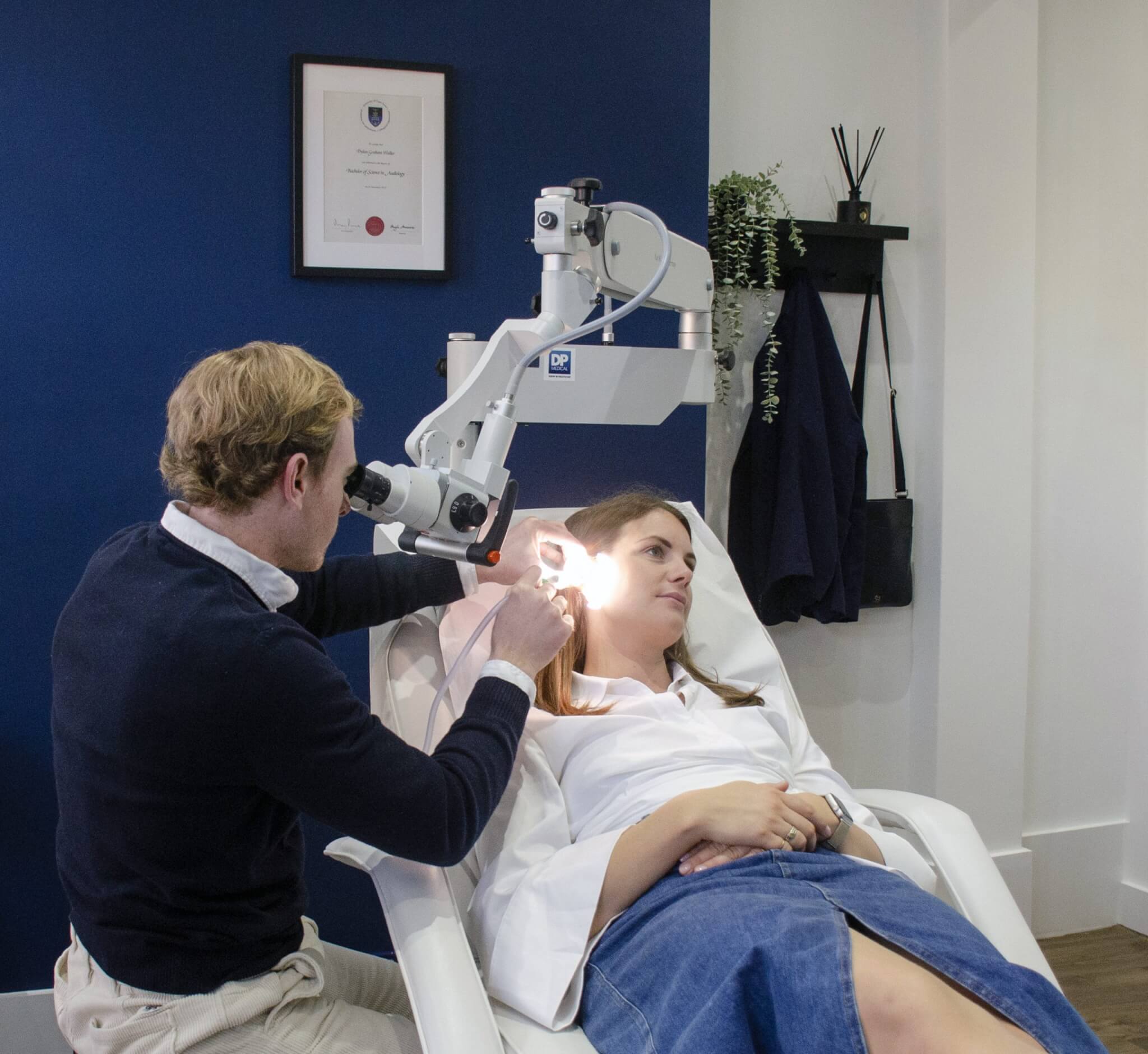
Microsuction
For some, it’s temporary. For others, it’s permanent, but that doesn’t mean it will always be a nuisance. A lot of people will simply reach a point where they stop noticing it most of the time.
Sometimes it can. Caffeine is obviously a stimulant, and for some people, it can cause the sound to sharpen. If you think it’s a trigger, try cutting back on your coffee intake for a few days and see if the volume goes down.
If you have a blockage, it’s like putting an earplug in. It muffles the outside world, which makes the internal noise of your nervous system seem much louder.
We are pleased to introduce our Executive Club Membership, designed for those who value exceptional ear care and personalised service.
Join Executive Club